Microneedling
Microneedling in Nashville & Mount Juliet
Medical-grade collagen stimulation with the Collagen Pin — performed by Mercedes Hester, RN. Genuine skin renewal, honest recommendations, no pressure to add what you don't need.
What it is
Microneedling, in plain language.
Microneedling uses precisely calibrated micro-channels to signal your skin to rebuild collagen and elastin — the two proteins that make skin look firm, smooth, and resilient. At Full Spectrum, we use the Collagen Pin®, a medical-grade device, at depths tuned to your specific skin and goal.
Over a series of treatments (typically 3–6, spaced 4–6 weeks apart), you'll see a gradual softening of fine lines, more even tone, refined pores, and a genuine glow — not the temporary flush of a facial, but real structural change in the skin.
What is microneedling?
Microneedling, also called collagen induction therapy, uses a medical-grade device with very fine, sterile needles to create thousands of tiny, controlled channels in the skin. Your skin responds by starting its natural healing process, which builds new collagen and elastin, the proteins that keep skin firm, smooth, and elastic.
Because the top layer of skin stays mostly intact, microneedling usually means less downtime and a lower risk of pigment changes than more aggressive treatments like ablative laser resurfacing or deep chemical peels.
Microneedling may help with:
- Acne scars
- Fine lines and wrinkles
- Uneven texture and enlarged-looking pores
- Overall skin rejuvenation and firmness
- Other scars, including surgical scars
- Stretch marks
- Uneven skin tone and some types of discoloration, such as melasma
At Full Spectrum, we use the Collagen Pin®, an FDA-cleared microneedling device. Professional treatments reach deeper than at-home rollers, which is why in-office results differ from what you can achieve at home.
Add-ons: Microneedling may be combined with platelet-rich plasma (PRP), GloXO, or the RXO Mask. Ask your provider whether an add-on makes sense for your goals. We apply only products intended for use on treated skin.
Who it's for
Where microneedling actually shines.
- Early fine lines and loss of skin bounce (late 20s onward)
- Uneven texture, enlarged pores, dull tone
- Post-acne scarring and mild hyperpigmentation
- Anyone building a long-term skin plan alongside great daily skincare
- Patients wanting real results without downtime that disrupts life
Microneedling suits many adults who want smoother texture, softer scars, or firmer-looking skin with minimal downtime. It can be used on many skin tones, though people with darker skin have a higher chance of temporary darkening of the skin, so settings and aftercare are tailored carefully.
Who it's not for
When Mercedes will say no.
Being the honest provider who says no goes for microneedling too — but Mercedes's list of "no's" is shorter and more evidence-based than most. Treatment is genuinely paused for active cold sores in the treatment area, and for anyone with an open skin infection or unhealed wound where you'd be treating.
And if a single facial or targeted skincare will get you where you want to go without needling, she'll tell you that too.
A few things you may have been told are hard "no's" that actually aren't:
- Active acne — the published research actually supports microneedling for active acne and shows meaningful improvement. It's not a reason to turn you away.
- Rosacea — with conservative settings and clinical judgment during a flare, microneedling is not shown in the literature to make rosacea worse. The skin barrier is preserved, not compromised.
- Recent Accutane (isotretinoin) — the 2017 JAMA Dermatology systematic review (Spring et al.) found insufficient evidence to delay nonablative treatments including microneedling. Mercedes will still assess your skin individually.
- Pregnancy & breastfeeding — this is a medicolegal precaution, not an evidence-based contraindication. There are no published reports of harm. The real nuance is avoiding potentially harmful topicals through the microchannels — not the procedure itself. Mercedes will have an honest conversation with you.
- Keloid-prone skin on the face — the face is one of the lowest-risk areas for keloid formation (keloids preferentially form on the chest, shoulders, and earlobes), and microneedling micro-injuries are far smaller than the injuries that typically trigger keloids. Microneedling of the chest, shoulders, or earlobes in a keloid-prone patient is where reasonable caution applies.
Microneedling may also need to be postponed if you:
- Have a weakened immune system or a condition that slows wound healing
- Have certain autoimmune or connective tissue diseases (such as lupus or scleroderma)
- Have an allergy to metals used in the needles (such as nickel)
- Have active eczema or psoriasis flares in the area
- Take blood thinners or have a bleeding disorder
Tell your provider if you:
- Get cold sores. Your provider may prescribe an antiviral before treatment.
- Use retinoids, exfoliating acids, or have had a recent sunburn or tan.
Safety
Risks and side effects.
Microneedling has a strong safety record. Most side effects are mild and go away on their own within a few days to a week.
Common and expected:
- Redness, similar to a sunburn, usually lasting 1–3 days
- Mild swelling
- Tenderness or a stinging sensation
- Dryness, flaking, or light peeling
- Pinpoint bleeding during treatment
- Minor bruising
Less common:
- Temporary darkening of the skin (post-inflammatory hyperpigmentation), more common in darker skin tones
- Breakouts
- Skin irritation or allergic reaction to products applied afterward
- Cold sore flare
- Tender lymph nodes near the treated area
Rare:
- Infection
- Scarring, including "track" marks from improper technique
- Granulomas (small firm bumps), usually linked to products not meant to go into the skin
Call us right away at615-351-7042if you notice: increasing pain, warmth, pus, fever, spreading redness after the first few days, or blisters.
What to expect
Your appointment, start to finish.
A numbing cream is applied for 20–30 minutes so treatment is comfortable. The actual microneedling takes 20–40 minutes depending on the area. Afterward your skin will look pink, similar to a mild sunburn, and feel warm and tight for the rest of the day.
Most patients are back to normal by the next morning. Add-ons — PRP, GloXO PDRN serum, or the RXO recovery mask — are applied while the skin is at peak absorption, so they compound the result without adding downtime. You'll go home with aftercare products and written aftercare instructions.
What results can I expect?
Right after treatment: Your skin will look pink to red and may feel tight or warm.
First week: Redness fades within a few days. Skin may feel dry or flake as it renews.
Over the following months: Collagen keeps building for months after each session, so improvement is gradual. Many patients see smoother texture and a healthy glow within a few weeks, with scar and wrinkle improvement continuing to develop for 3–6 months after the series.
How many sessions? Most patients need 3–6 sessions spaced about 4–6 weeks apart. Deeper acne scars often need more sessions. Microneedling works best on mild to moderate concerns; severe scars may respond better to a combination of treatments.
Maintenance: Your skin continues to age, so the honest answer is as often as you can comfortably afford. Once a year is great — Mercedes microneedles her own skin 8–10 times a year.
Results vary from person to person. Your provider will set realistic expectations based on your skin and goals.
Investment
Pricing, no surprises.
- Face + Neck — $375
- Face, Neck + Décolleté — $425
- Series of 3 (Face + Neck) — $1,050
- Full Renewal Package — add GloXO, RXO Mask, and the First Light exosome eye treatment (EyeXO, a 15 mL take-home bottle applied to the eye area twice a day) to any microneedling — $220 (save $85)
Most patients need a series of treatments for the best results. Microneedling for cosmetic purposes is generally not covered by insurance. Financing is available, including 0% APR plans through Cherry, and we accept CareCredit — see financing options. Your provider will give you a personalized plan and price at your consultation.
You'll never be pressured to add or upgrade — the recommendation is what Mercedes would do on her own skin.
Add-ons
Optional enhancements.
- PRP (platelet-rich plasma) — $225
PRP is made from a small sample of your own blood, which is spun in a centrifuge to concentrate the platelets in the plasma. Platelets contain growth factors involved in your body's natural repair process. As a microneedling add-on, PRP may support skin rejuvenation and improvements in texture and acne scars. It isn't a must-have for everyone — Mercedes will help you decide whether it makes sense for your skin and goals. Results vary.
- GloXO — DNA Repair Complex Serum — $135
Designed to accelerate post-procedure healing, featuring Salmon PDRN, plant exosomes, and sodium hyaluronate to enhance results and calm the skin during recovery.
- RXO Mask — $40
A soothing post-treatment mask that reduces redness, calms irritation, and leaves skin hydrated, comfortable, and primed for results — patients notice less visible downtime after use.
Aftercare
The 72 hours that matter most.
- No makeup for 24 hours unless it's Colorescience mineral makeup, which you can wear right away; use only recommended post-care products
- No sweat, sauna, hot yoga, or vigorous exercise for 48 hours
- SPF 30+ daily and no direct sun for at least a week — and reapply every 90 minutes when outdoors (that's how long sunscreen actually lasts, regardless of the number on the bottle)
- A big floppy hat for the first 7–10 days when you're outside — shade is your best friend while the skin is remodeling
- Skip retinoids, exfoliating acids, and physical scrubs for 5–7 days
- Drink extra water — hydrated skin heals faster
Full written aftercare is sent home with you and available by text if questions come up.
Need a mineral SPF that won't sting healing skin? See the skincare products Mercedes recommends.
Results
Before & after.
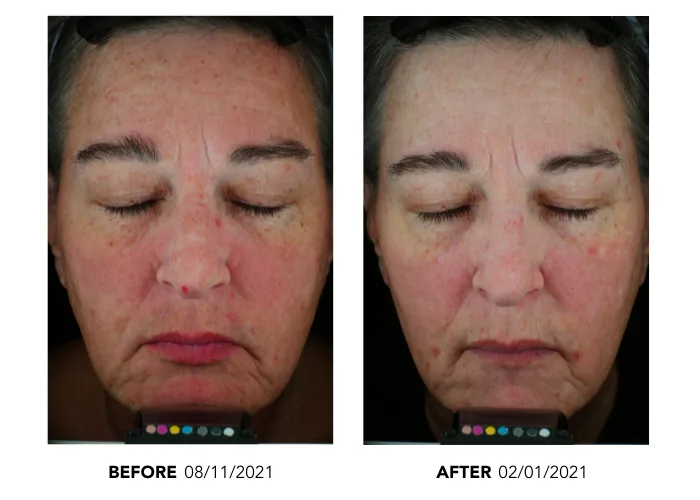
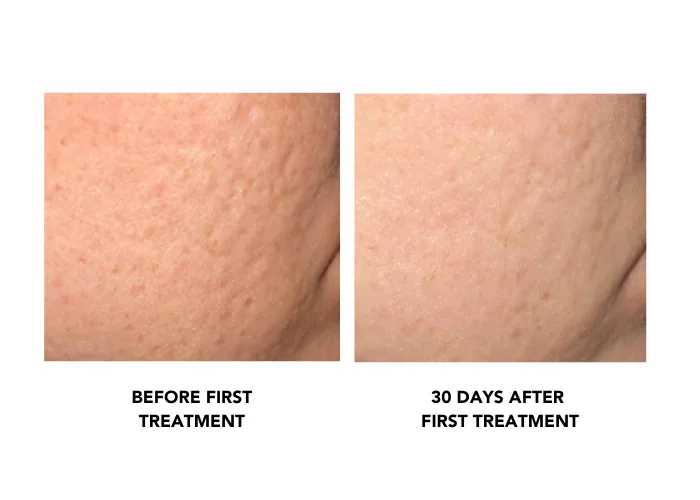
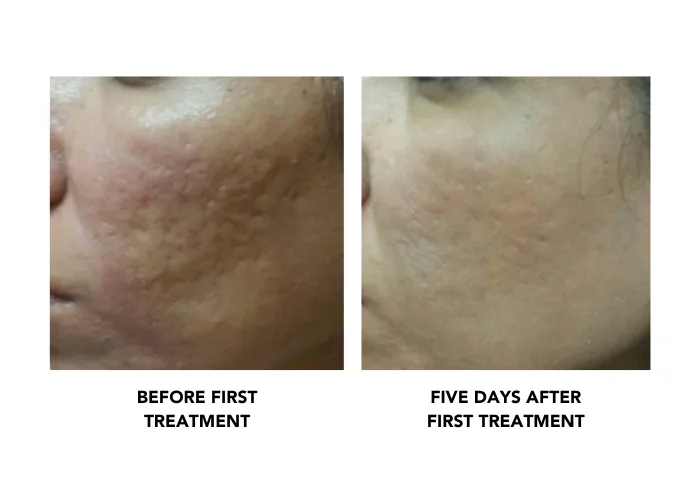
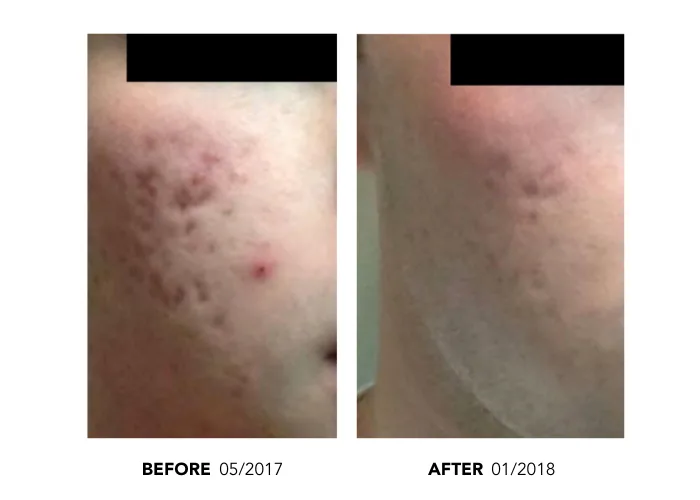
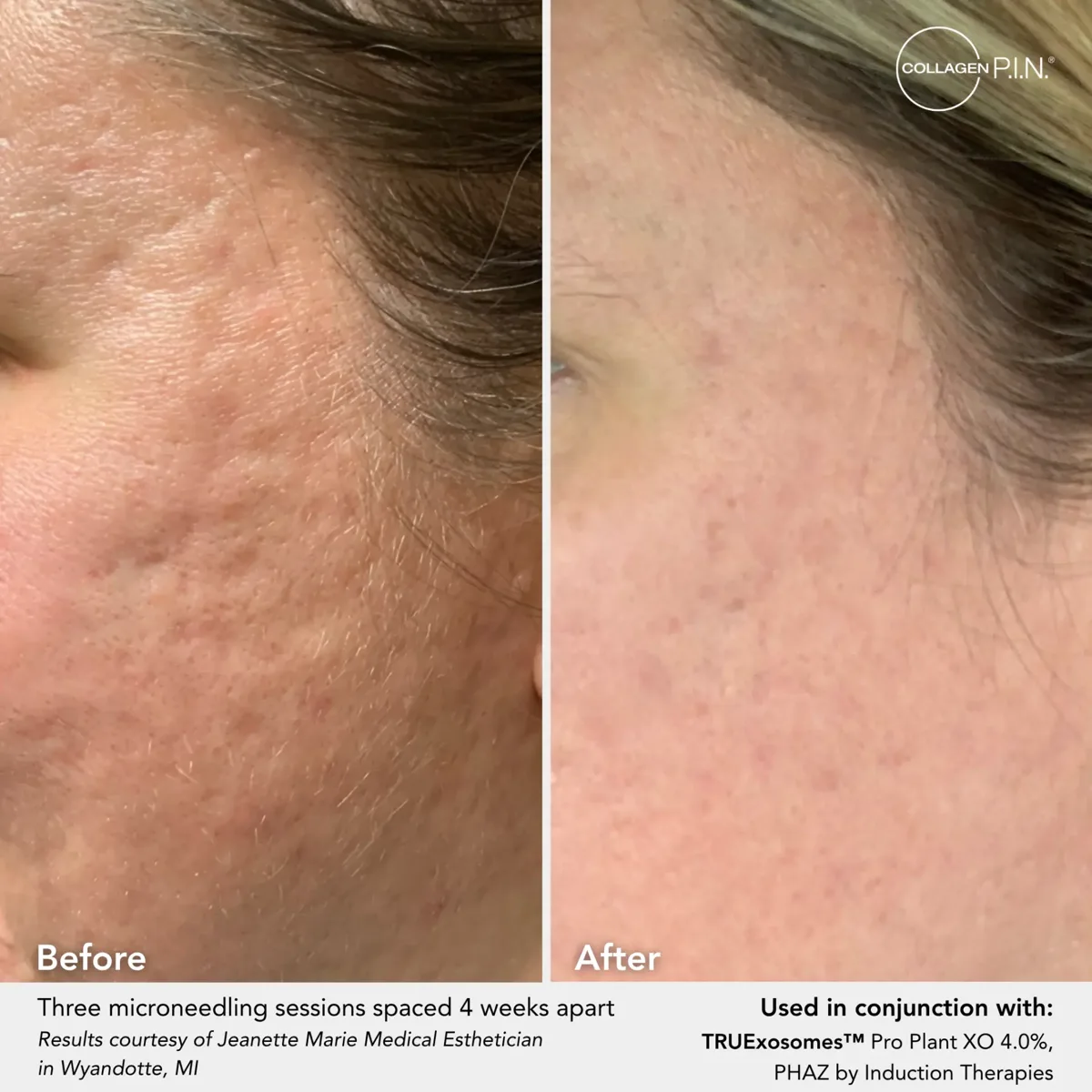
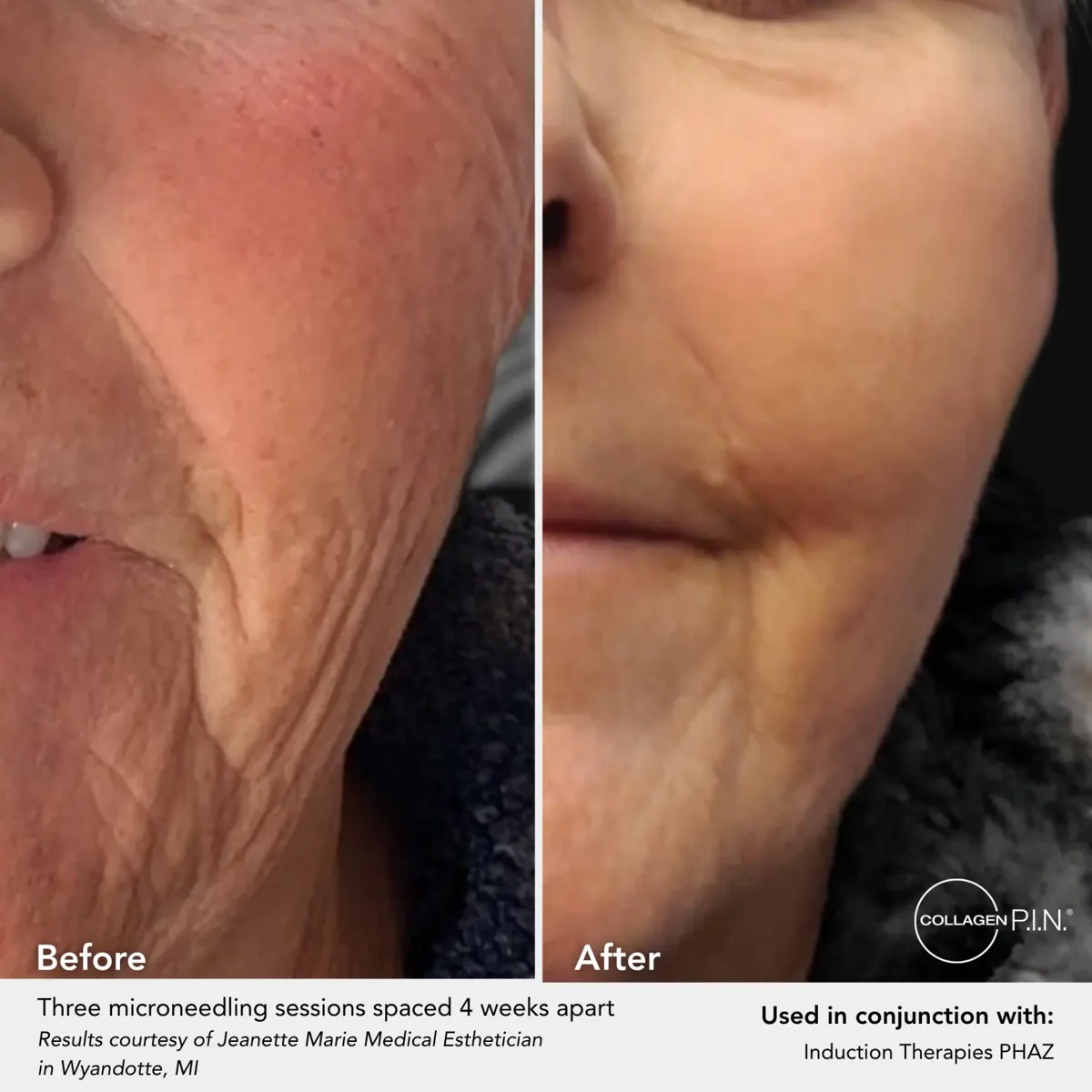
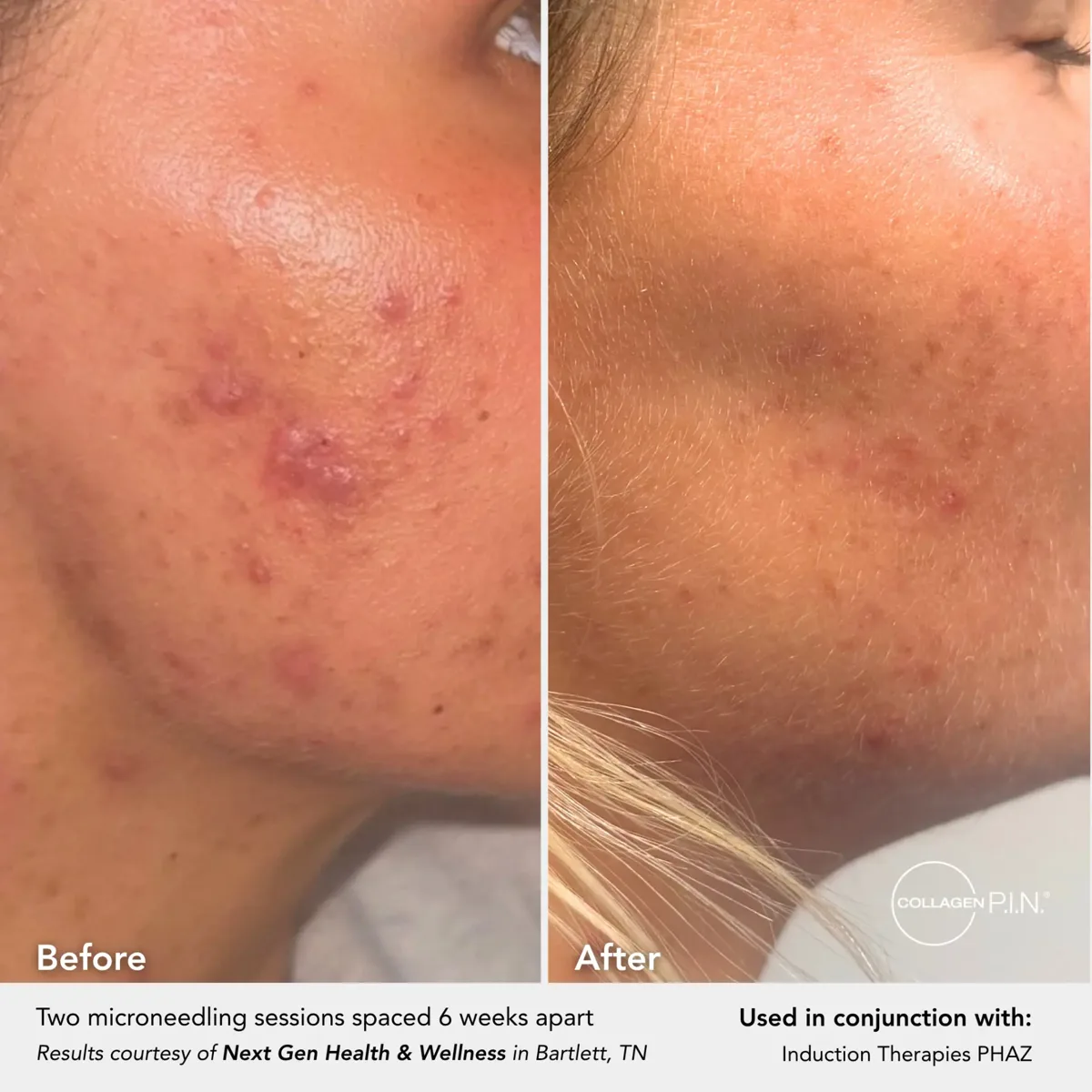
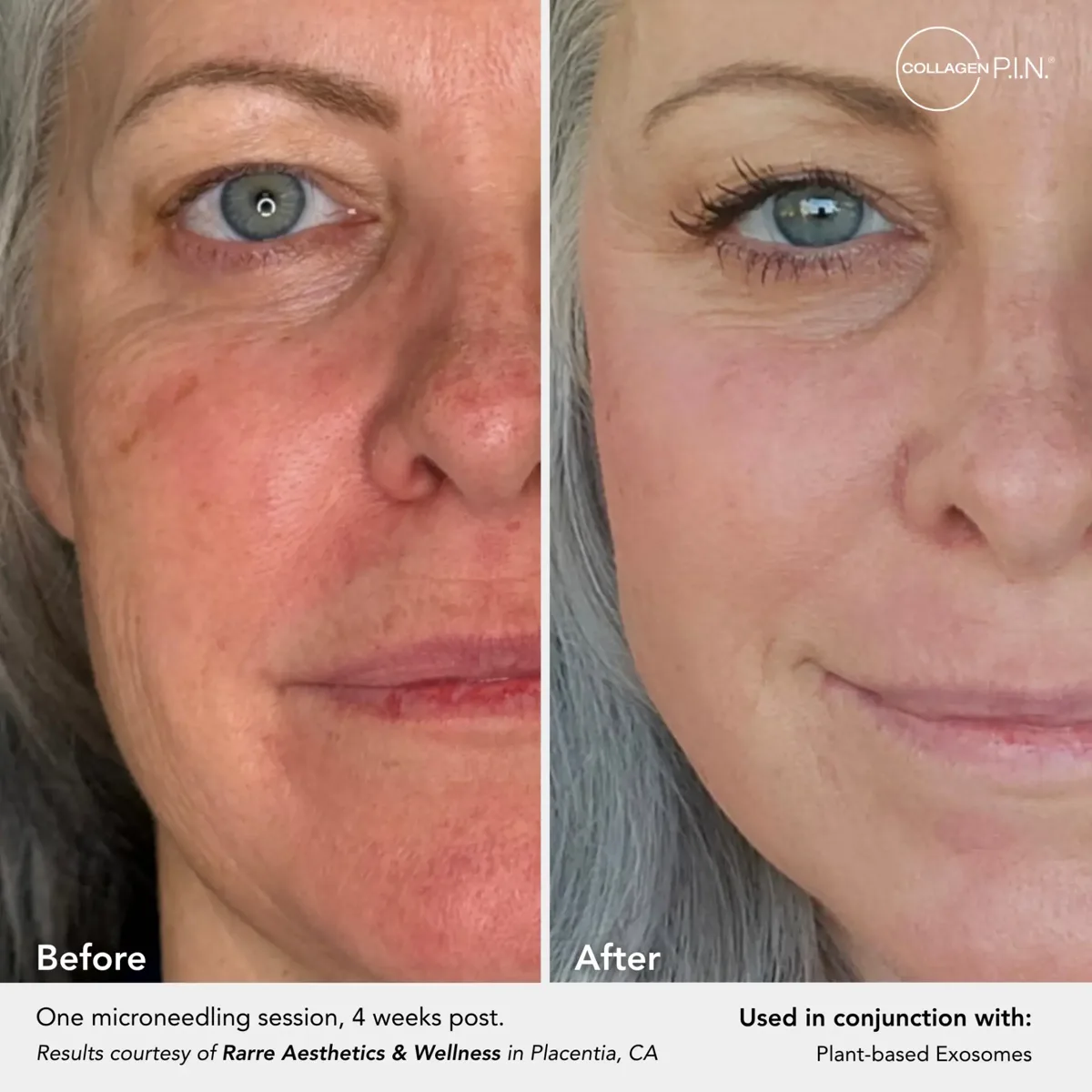
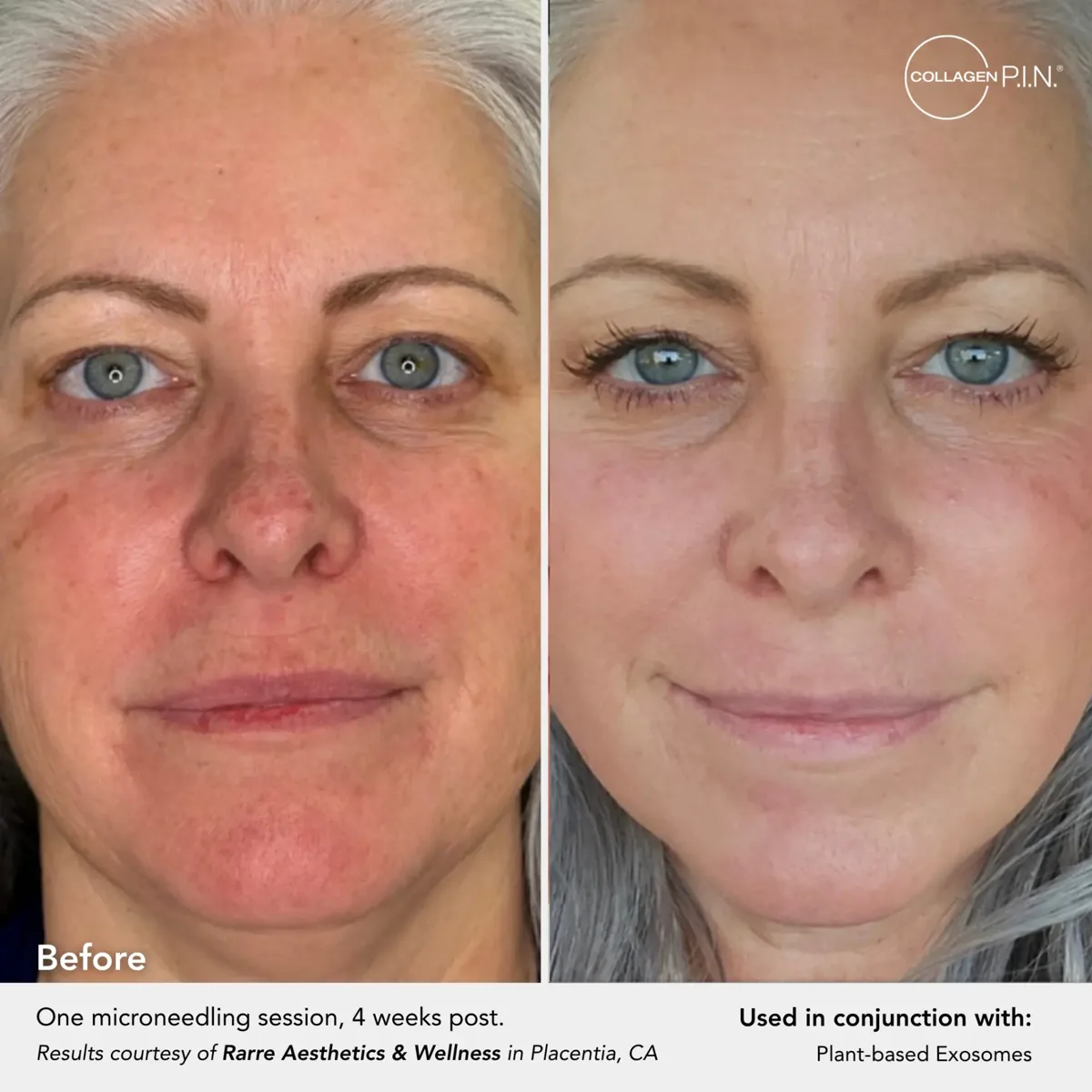
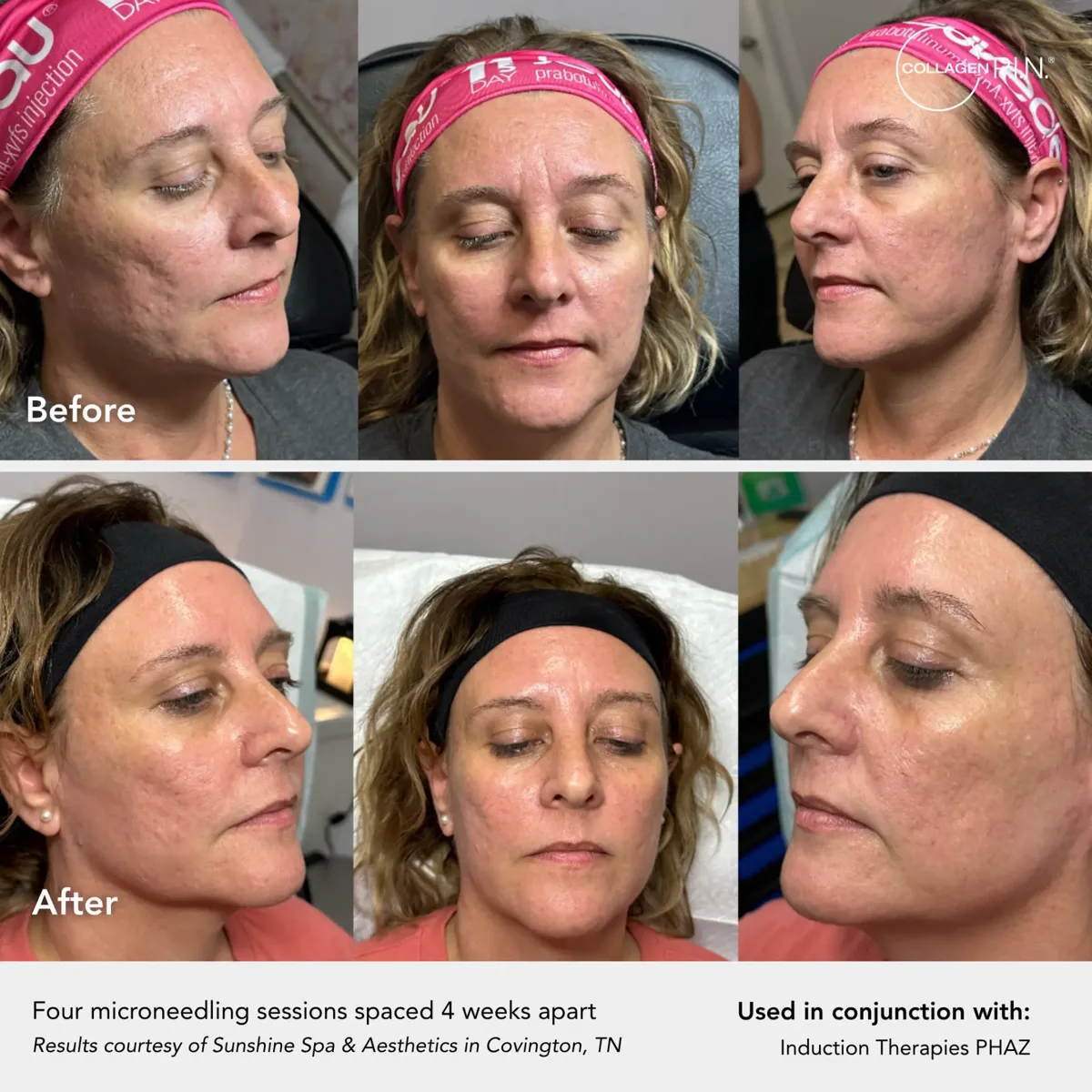
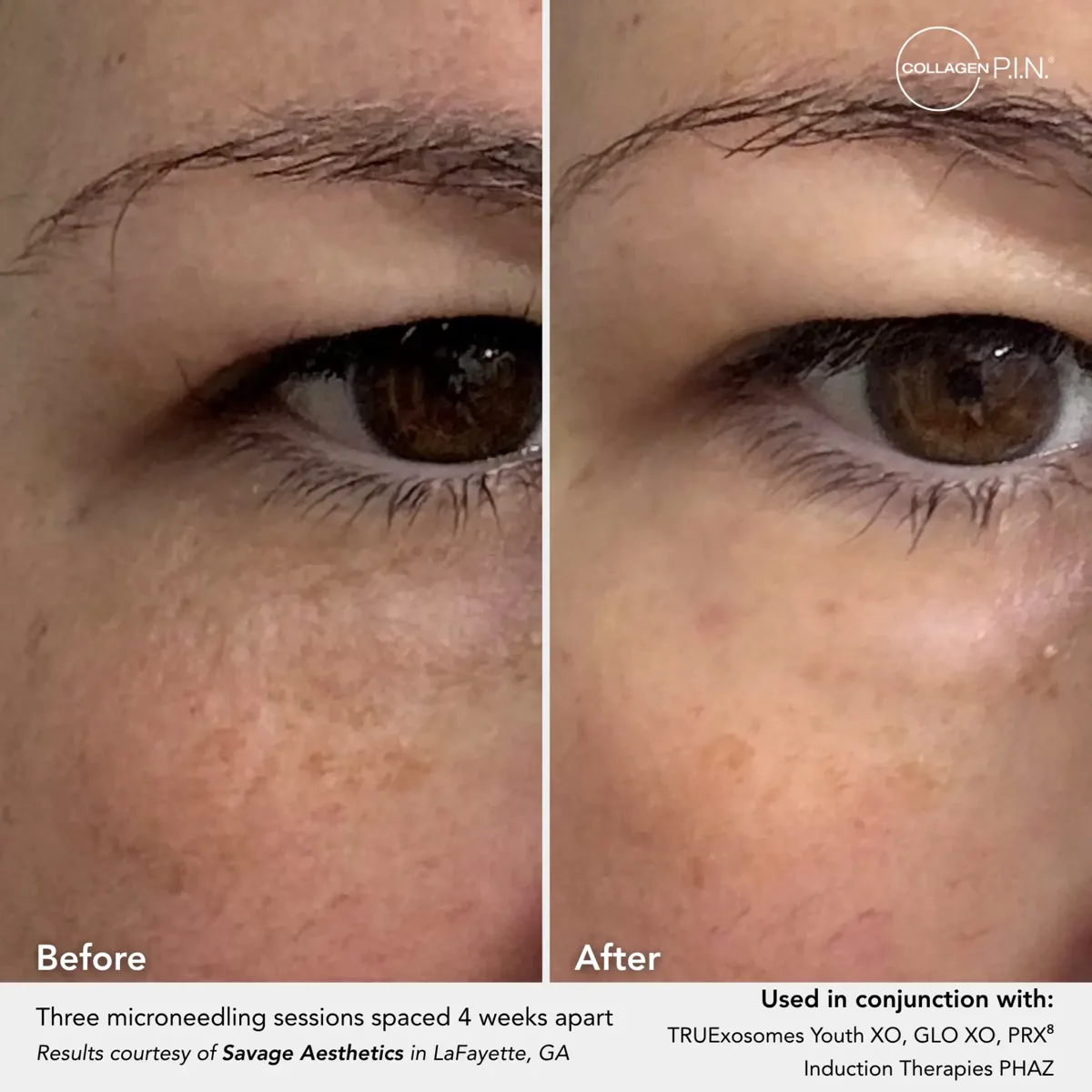
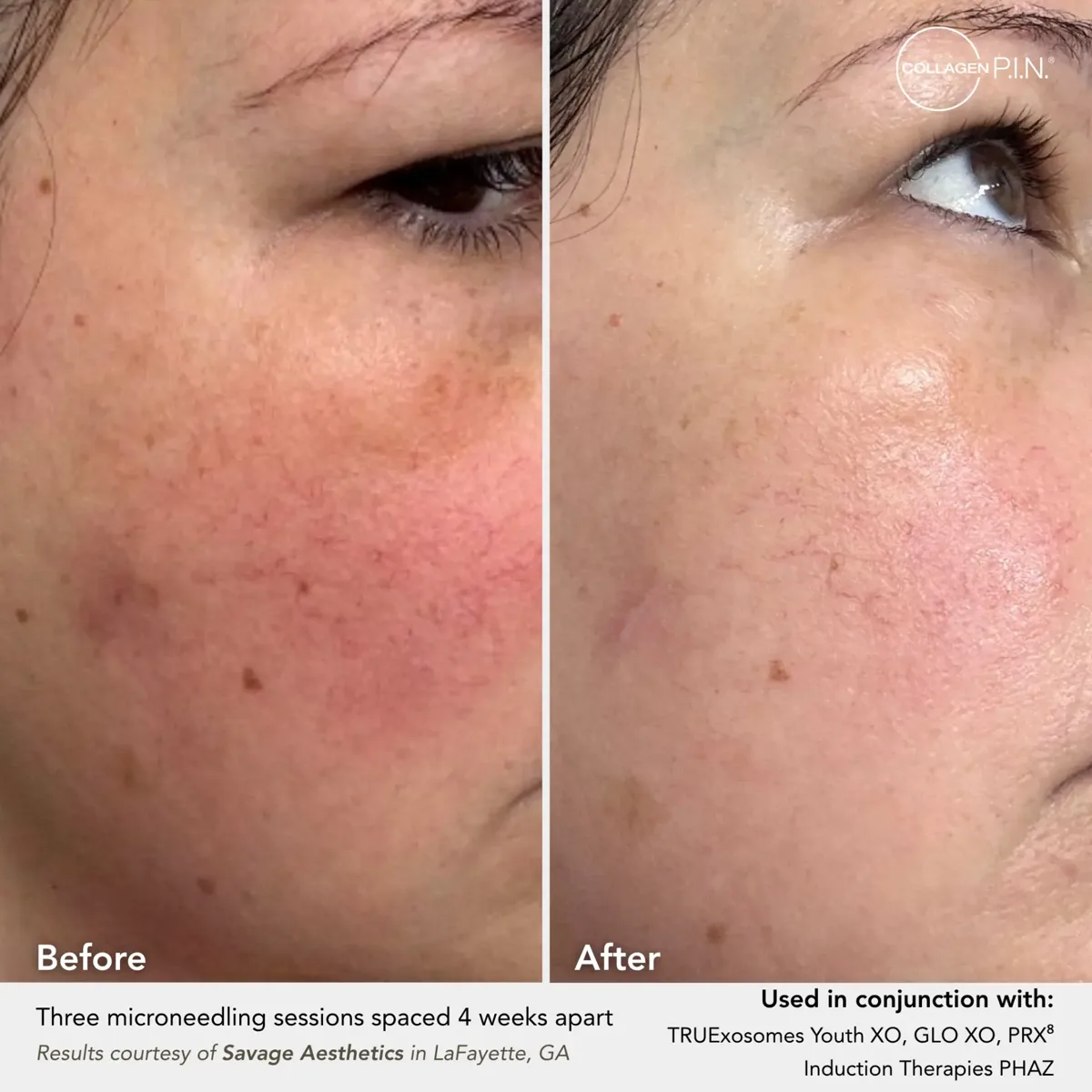
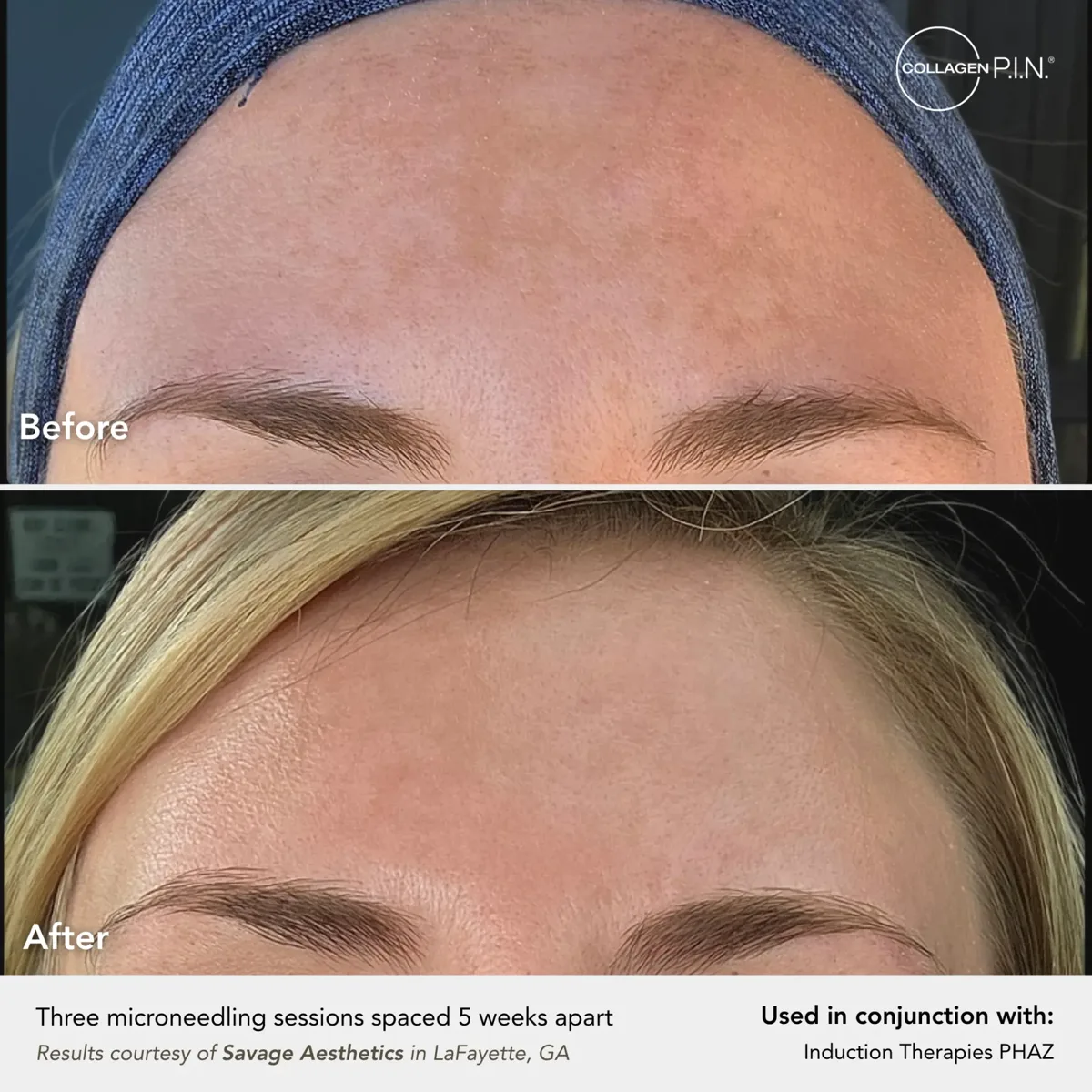
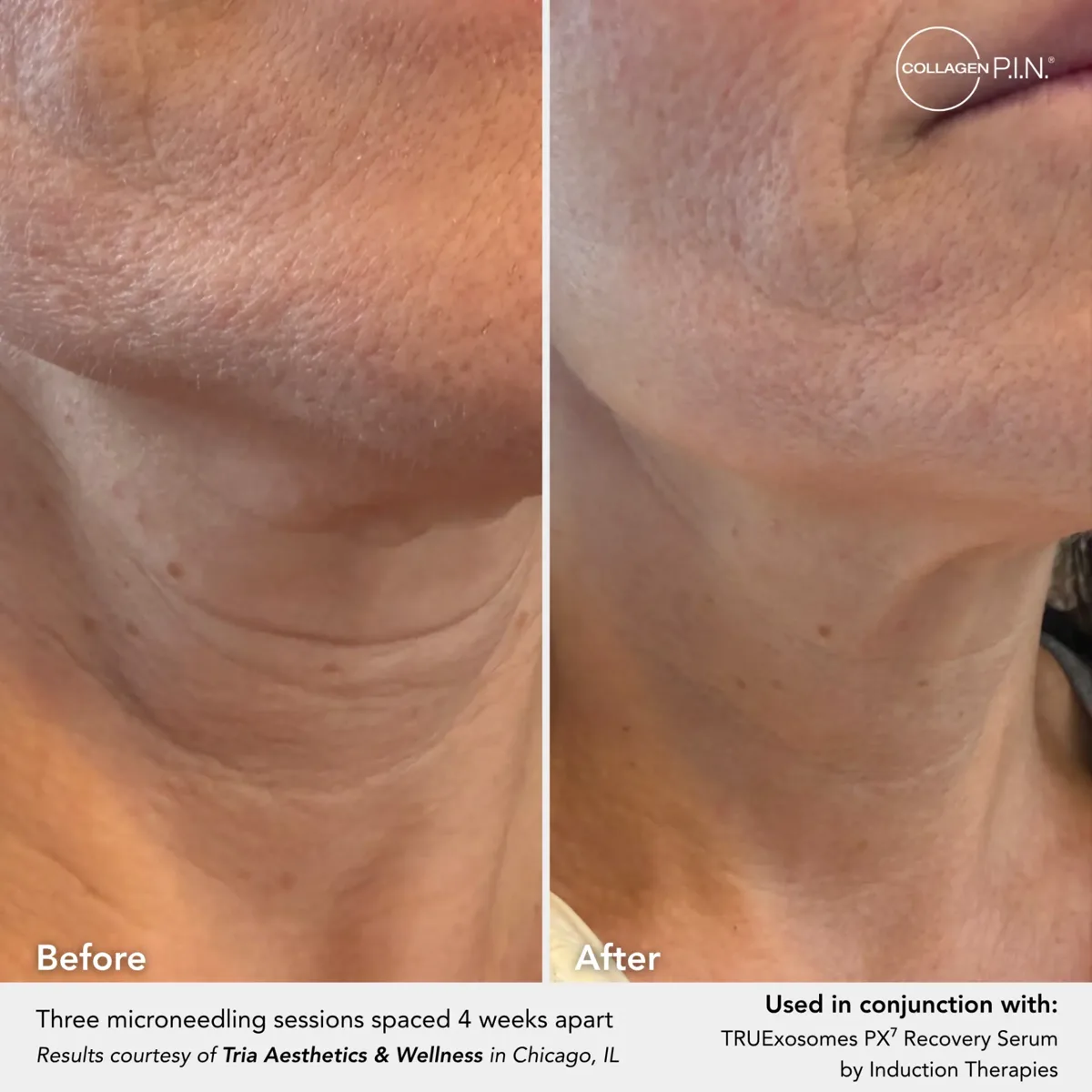
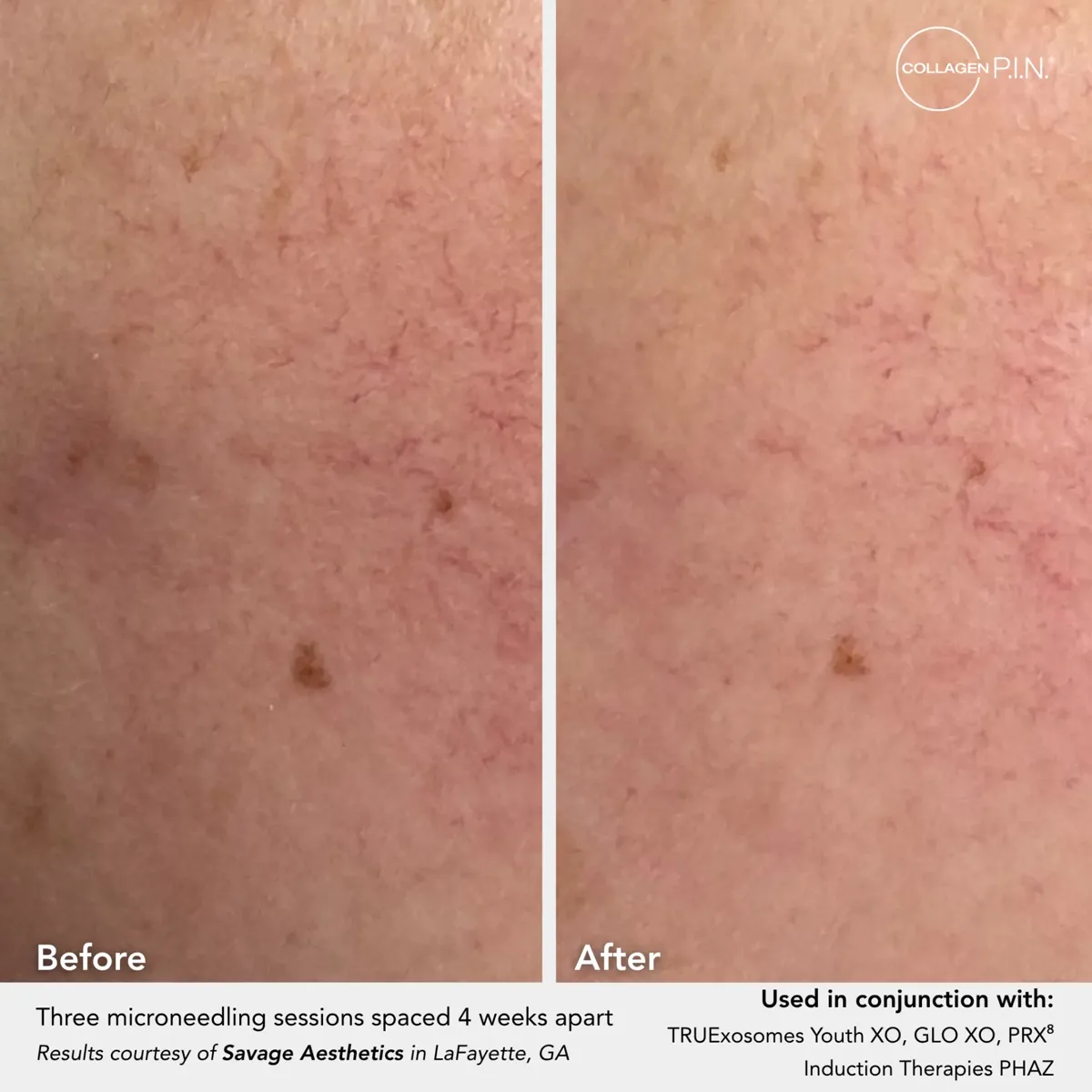
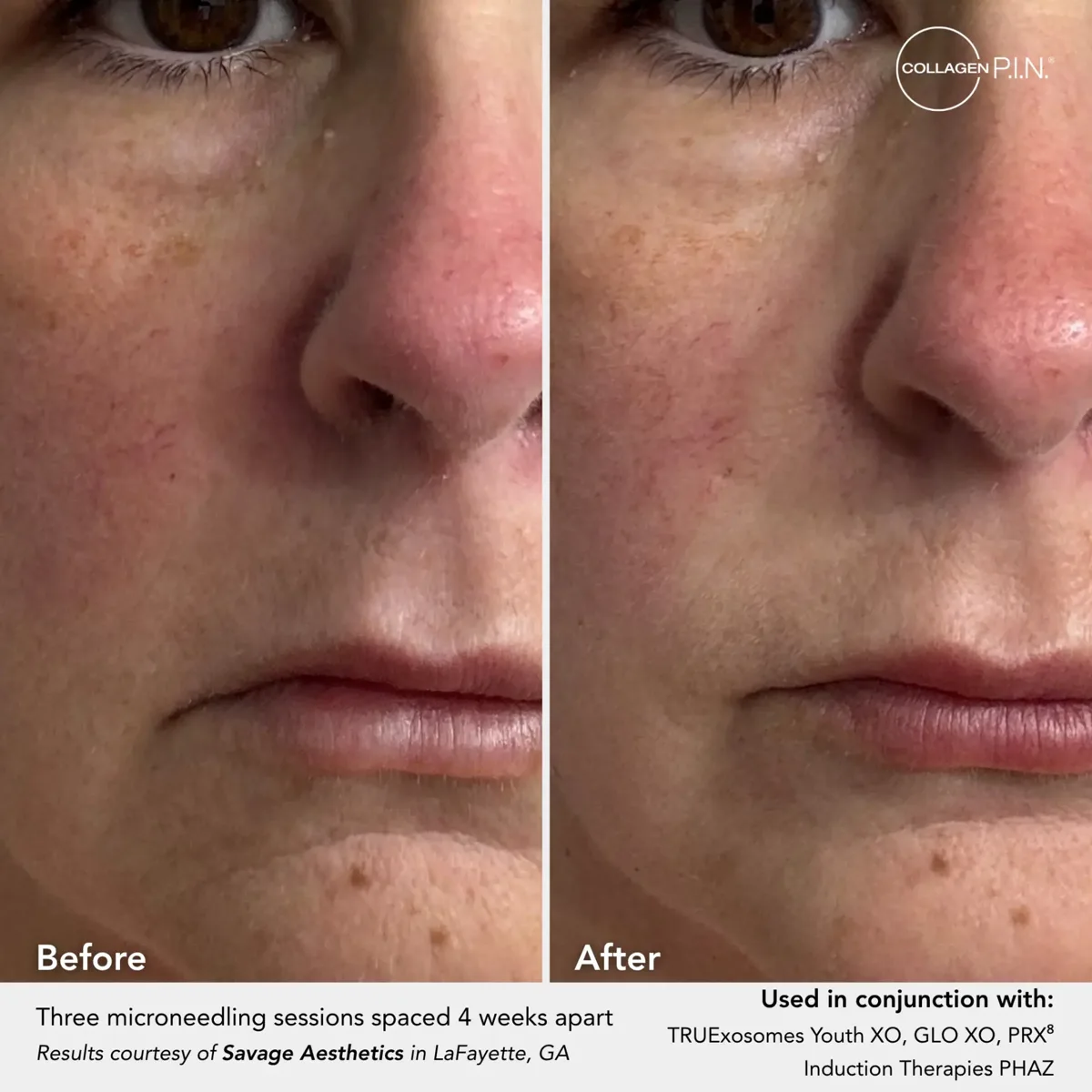
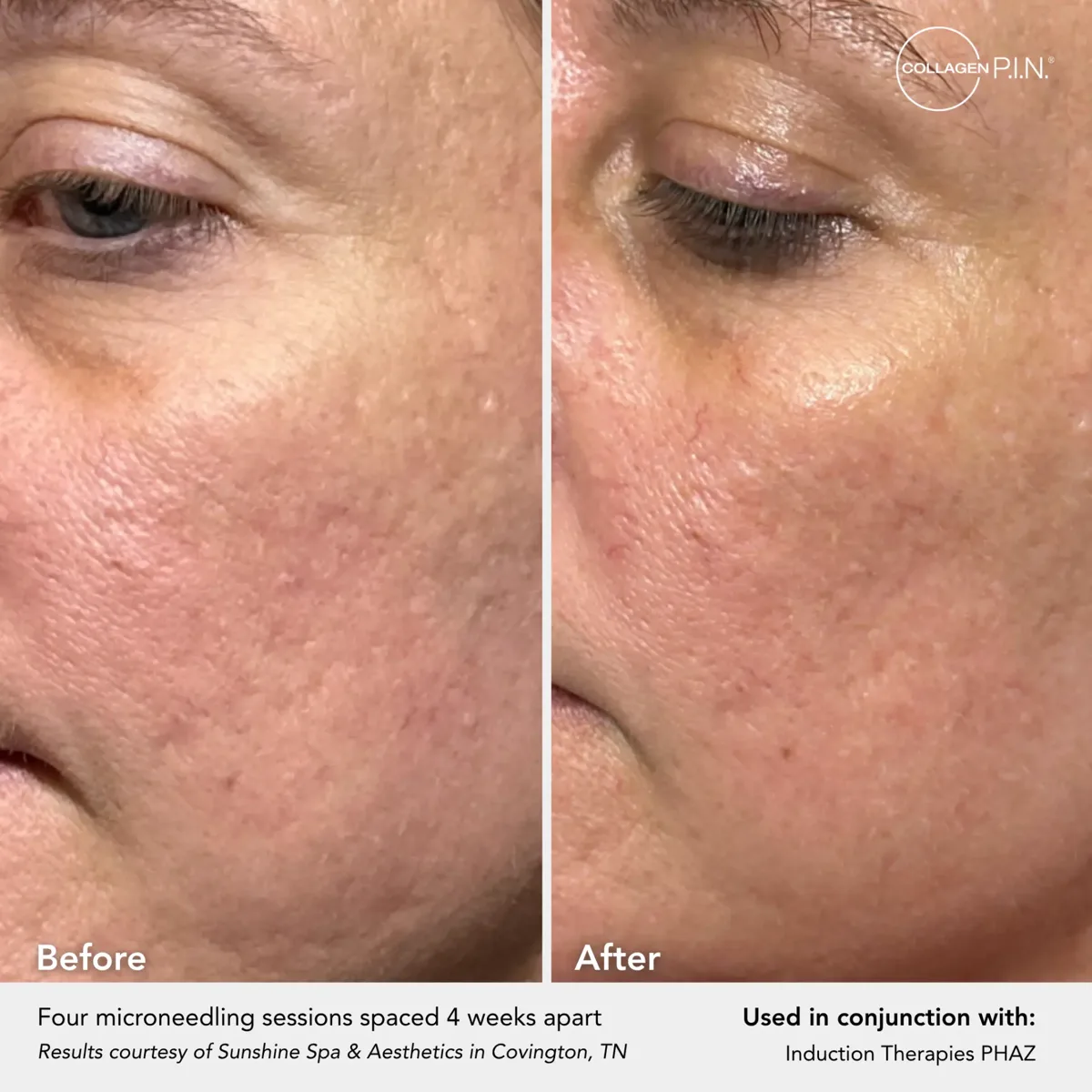
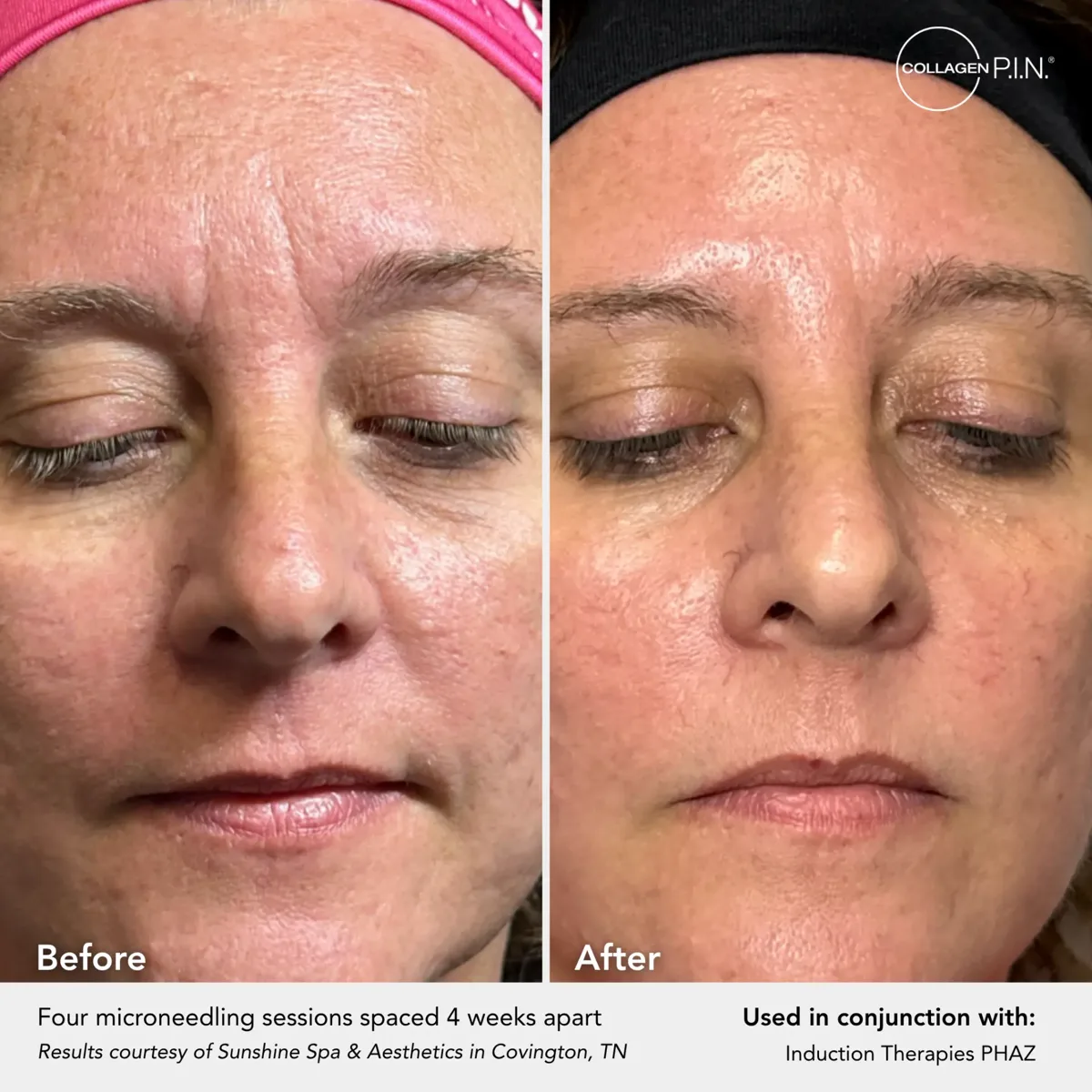
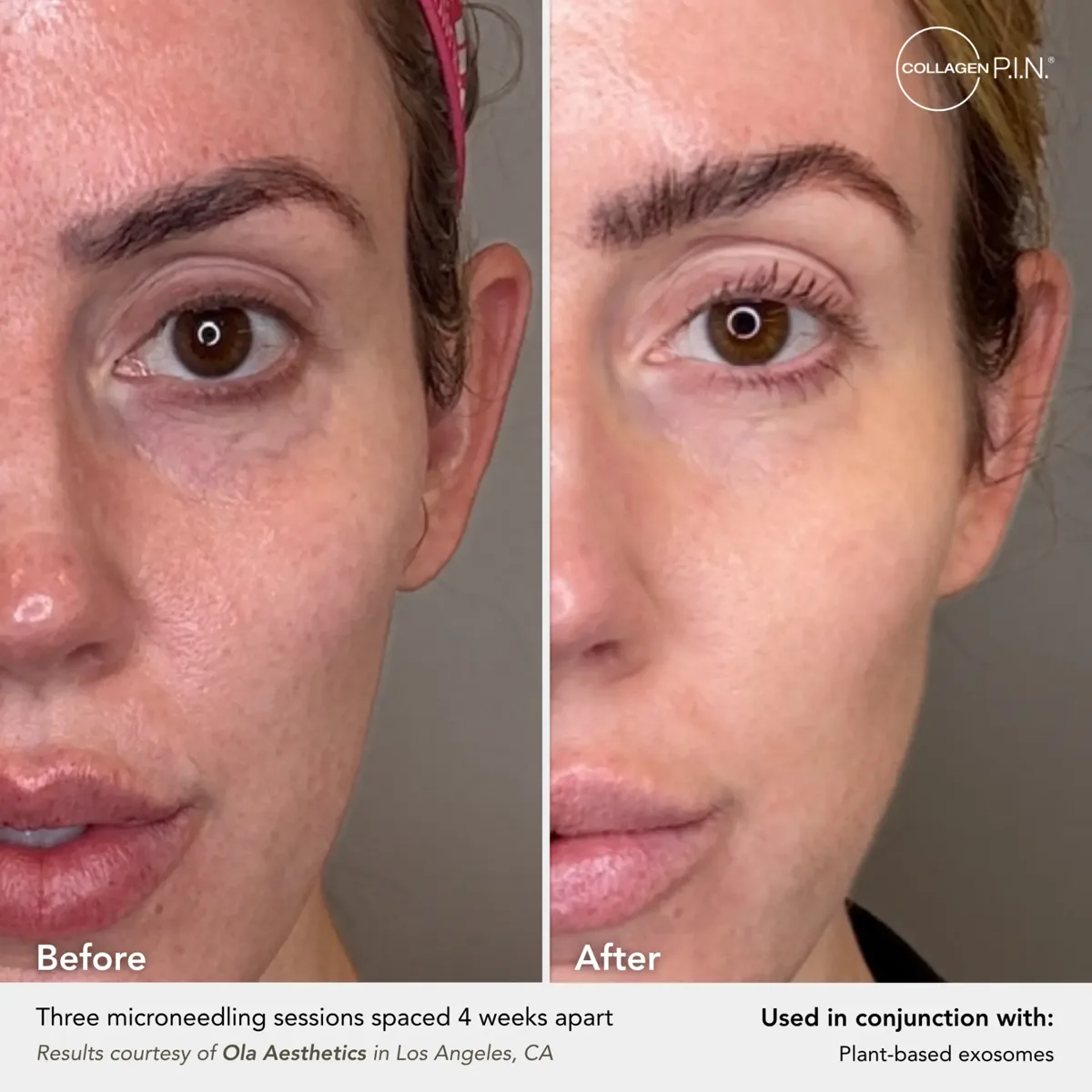
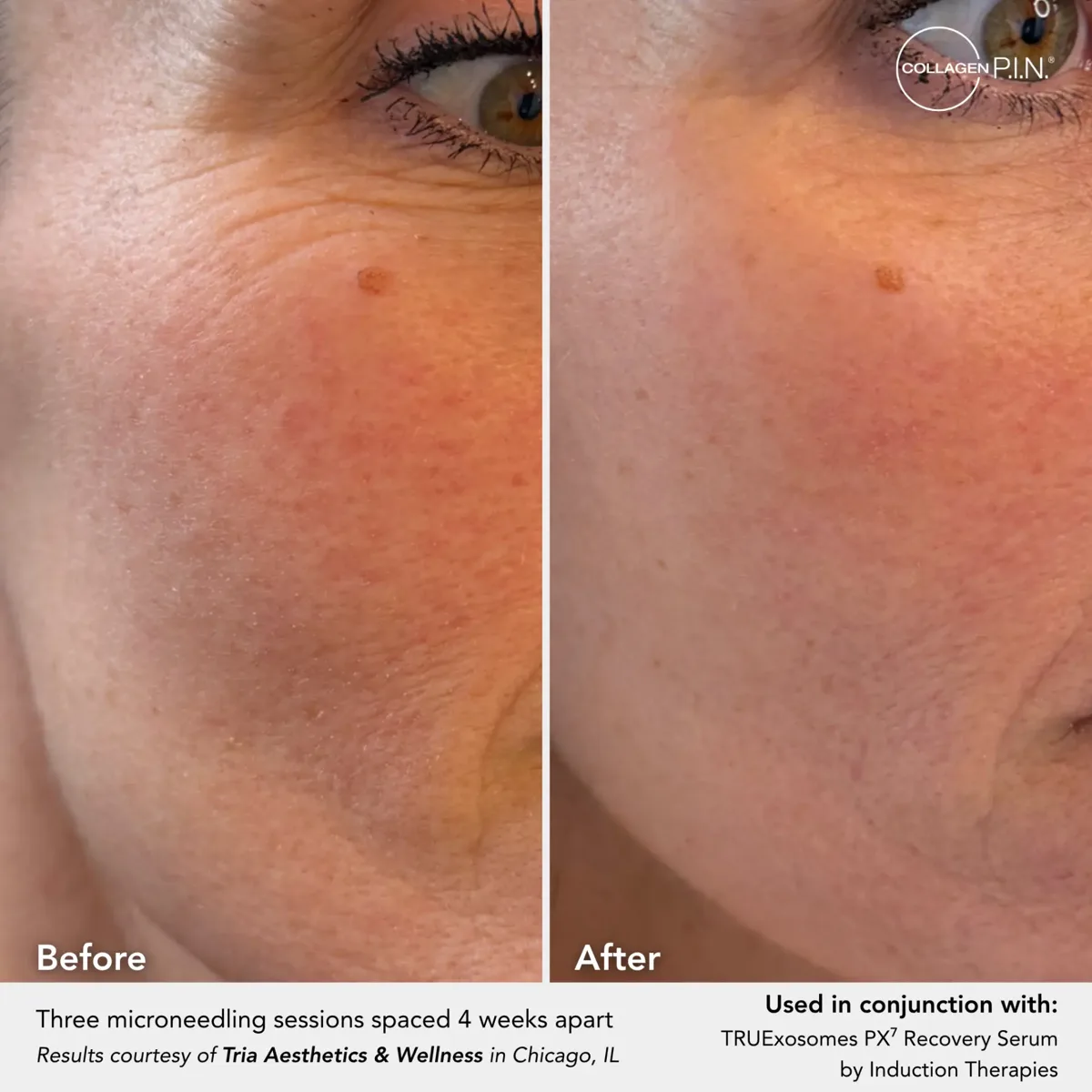
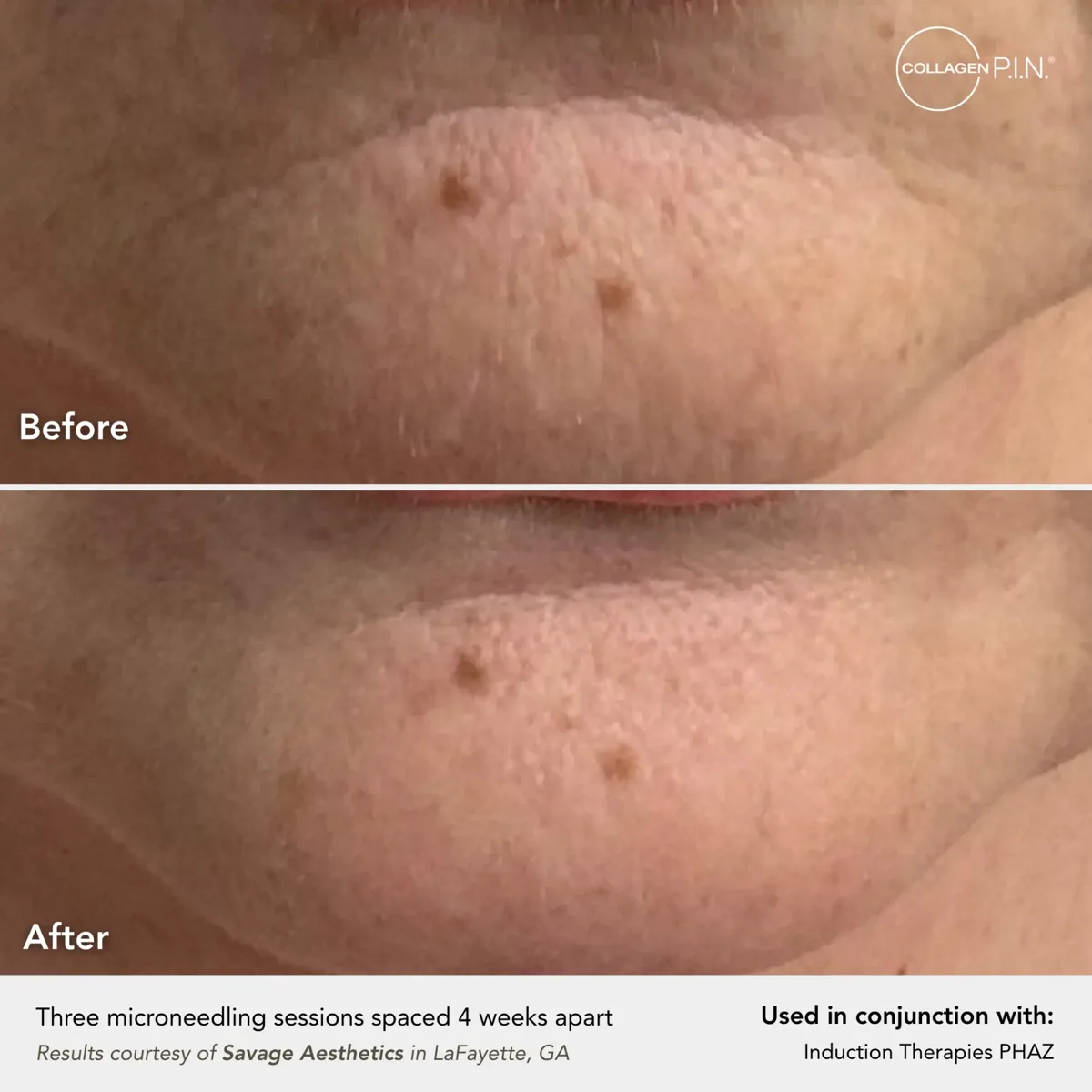
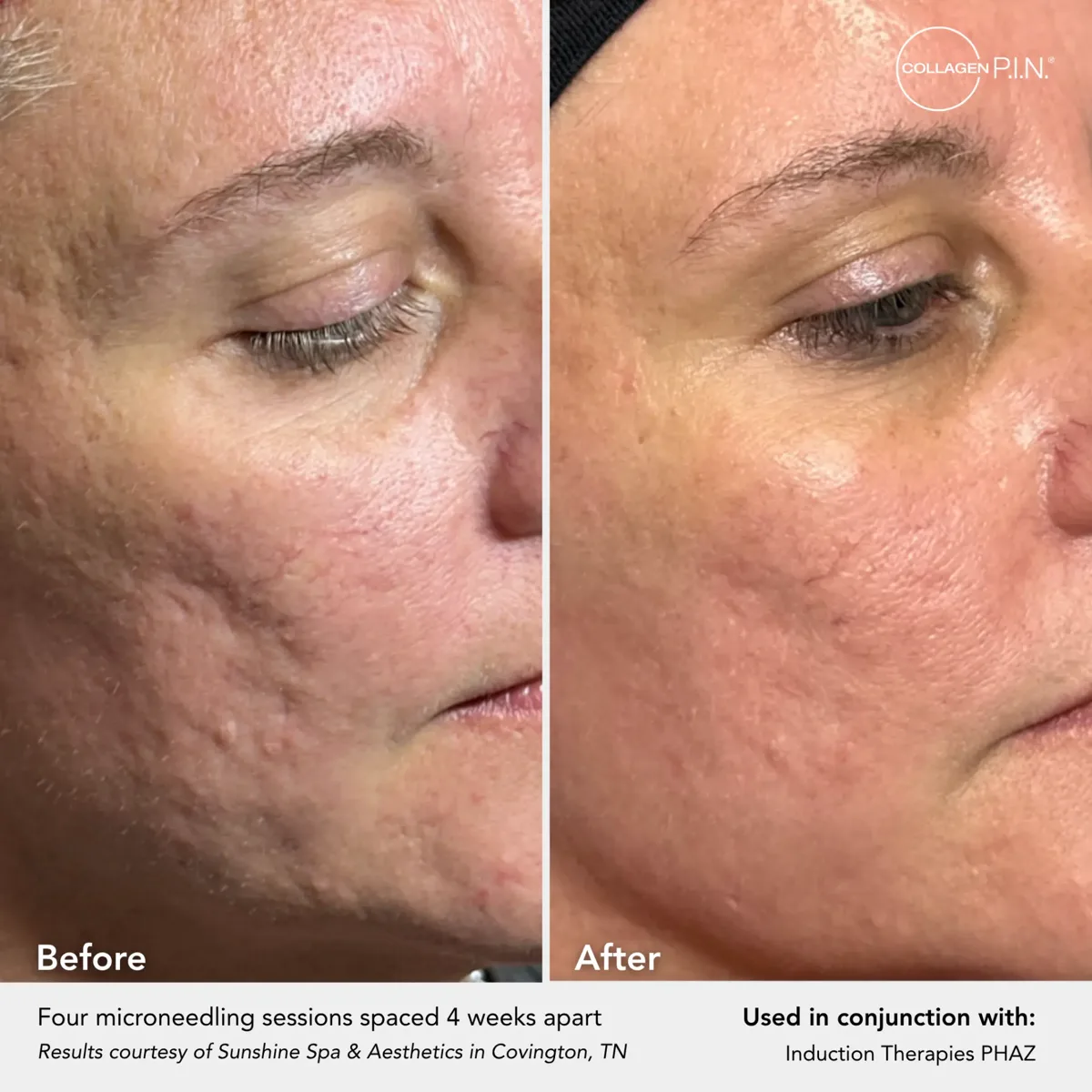
Photos provided by the Collagen PIN® manufacturer and partner clinics, not Full Spectrum patients. Individual results vary.
Questions
Frequently asked questions
Does microneedling hurt?
We apply a numbing cream before treatment. Most patients describe a mild scratching or vibrating sensation.
How long does a session take?
About 60 minutes, including numbing time.
Is there downtime?
Downtime is minimal. Most people have redness for 1–3 days and return to normal activities within a day or two. Plan around important events.
When can I wear makeup?
Right away if you're wearing Colorescience mineral makeup. Otherwise, usually after 24 hours. Clean skin helps reduce infection risk.
Is professional microneedling different from at-home rollers?
Yes. At-home rollers use much shorter needles and only treat the surface. Professional devices reach deeper to stimulate collagen and are used under aseptic conditions.
Is microneedling safe for darker skin?
Microneedling can be used on all skin types and is generally considered lower risk for pigment changes than many lasers. Darker skin still has a higher chance of temporary darkening, so we adjust treatment and stress sun protection.
Can I combine microneedling with other treatments?
Yes. It is often paired with PRP, chemical peels, or injectables. Your provider will plan the timing between treatments.
Who performs the treatment?
Treatments are performed by Mercedes Hester, RN, CEN, CPEN, AMB-BC, under the supervision of Dr. Erika Kelly, DO, Board Certified in Internal Medicine.
See the full aesthetics menu or read about the Full Spectrum philosophy.
Ready When You Are
Book your microneedling consultation.
Complimentary consultations with Mercedes Hester, RN — inside Boho Beauty Co. in Mount Juliet, serving the greater Nashville area.
Book a ConsultationTreating someone special? Buy a gift card
This page is for general information only and is not a substitute for a medical consultation. Individual results vary. Schedule a consultation to find out whether microneedling is right for you.